Rank:
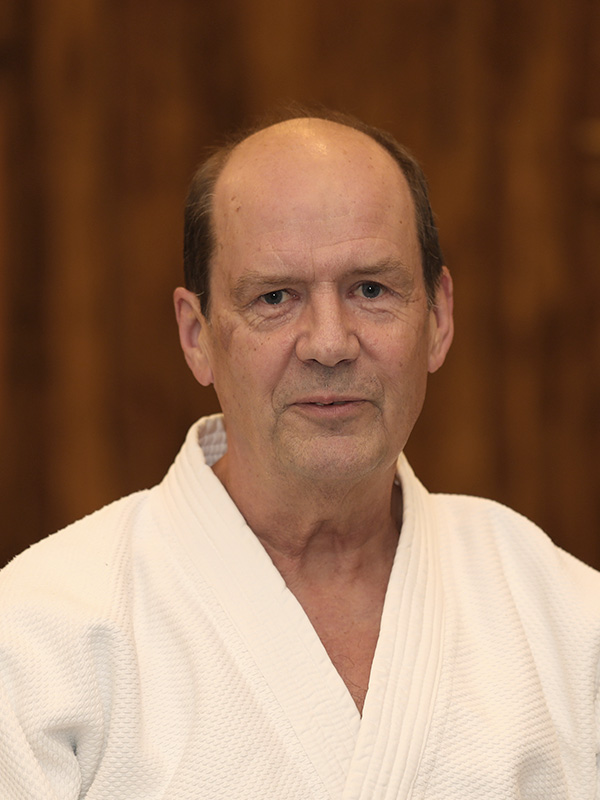
6 dan, shidoin
Club function:
Founder, chief instructor and treasurer
How long have you been training?
After a short period of ju-jujutsu training under Kurt Durevall in the late 70’s, I started training aikido in 1981 at the Gothenburg Aikido Club. The aikido training in Gothenburg was characterized by a powerful aikido with a clear functional perspective, which suited me. I trained for Morihiro Saito sensei the first time in 1988 in Stockholm / Copenhagen to become a uchi-deshi in Iwama a couple of years later in 1990. Having the opportunity to train in O-sensei’s dojo under Morihiro Saito sensei’s management was a fantastic experience for me.
In 2003, I founded Riai Aikido Dojo, with Pia Moberg, to realize our ideas for a large dojo with traditional aikido training. An important challenge for us is how to handle a tradition without solidifying in memories of the past and at the same time build a strong and progressive movement culture. A key part for us at Riai is the dojo itself, and to give those who train the best conditions to study aikido in an environment which is welcoming, inclusive and safe. Another factor is that the quality of the training with us at Riai must be in absolute top class with both our instructors and guest instructors. A way for us to maintain our quality is to be accepting of other styles and good aikidokas, but also evaluative of our own methods and ideas about how we build quality around training. Something else of importance for us is to invite and train for different aikido teachers with a perspective on the aikido we perform, and to build social networks around the training both in Sweden and internationally. In our tradition, there is, through Saito sensei, an extensive documentation of O-sensei’s aikido. This documentation is available to support anyone who practices aikido, to be able to take part in the tradition themselves, which we strongly encourage.
The best thing about training?
I am still fascinated by the techniques as an expression of the underlying principles, which are applicable both on and off the mat. My view is the “system” aikido gradually becomes communicative to the practitioner on an individual and personal level, for me completely without any kind of metaphysical connection. By repetitively practicing certain basic pattern movements, I have access to a fantastic movement system, similar to a language or art form. Physical exercise is of course an important part, aikido is mainly practiced in the dojo. Since much of the training is done together with other people, it is often difficult to train without being really focused, and the experience of concentration and presence is a big part of the fascination for me.
Aikido is both an individual journey and a group journey. It means training companions who contribute to my development through perspectives on the training, and – the simplicity, all I need to do is to get myself to training.
The dojo’s entire operations are of great importance in creating a vibrant and relevant dojo. Contributing to ultimately changing the future of aikido is, of course, very satisfying, even if our efforts in the grand scheme of things are modest.
Aikido is a significant part of my life, both on and off the mat, which makes my life rich.
Misc:
Jan has completed the Swedish Budo and Martial Arts Association’s licensed training for group instructors and club instructors.